
Post-Second World War, the United States and the Soviet Union were locked in an intense scientific and symbolic contest: The Space Race. It began in the late 1950s with Sputnik and Yuri Gagarin’s first manned orbit, and culminated in the US Moon landing in 1969. This race turned outer space into a high-stakes arena of prestige and technological dominance. It reflected a Cold-War era bipolar world. Science, in this case, became the lens through which global hierarchy was reshaped: competition over rockets and satellites reflected the distribution of power among states. Looking through the lens of scientific competition and the race for innovation, the Space Race offers only one moment in time. The same logic, where scientific leadership becomes a proxy for a global order, now applies to Earth’s last great frontier.
In Antarctica’s blinding white silence, the emperor penguin has become an accidental diplomat. Its survival is hostage to a new cold calculus of power and prestige. The Antarctic Treaty System (ATS), forged in the early Cold War to depoliticise the continent, froze sovereignty claims and privileged science through consensus decision-making. As the United States scales back investment and lets infrastructure atrophy, Russia and China have expanded their presence, using scientific projects and new stations to lock in strategic influence. Just as the Space Race turned orbital treaties into prestige battlegrounds, today’s Russia–China axis exploits the ATS’s ambiguities for geopolitical leverage and institutional shaping, while its rules-based culture comes under strain. Against this backdrop of fraying norms and shifting power, Antarctica now looks less like a neutral laboratory and more like a geopolitical chessboard. If the West meets this shift with restraint alone, it will hasten multilateral decay, turning the planet’s commons into the next arena of bloc fragmentation. These maneuvers force a pivotal question: How are shifting dynamics in Antarctica undermining the postwar liberal order’s assumptions of neutral science and consensus-based governance?
The Power Play
The Antarctic Treaty System (ATS), adopted in 1959 by 12 nations and now encompassing 58 parties, enshrines the continent as a demilitarised zone dedicated to freedom of scientific investigation and the suspension of territorial claims. These principles held firm even through Cold War tensions, keeping Antarctica free from territorial disputes and military activity. Yet these norms are fraying as dual-use research stations multiply across the continent. Such civilian outposts can later support logistics, surveillance, or power, turning ice shelves, thick platforms of floating coastal ice, into strategic footholds that embed permanent presence and influence while technically upholding the treaty’s letter. The United States, Russia, and China now drive this strategic shift within the wider Antarctic Treaty System that also includes claimant states like Australia and the United Kingdom, as well as scientific powers such as Japan, Germany, and India. China’s proposed sixth station in unclaimed Marie Byrd Land, near resource-rich zones once under informal US sway, exemplifies this trend, while Russia’s revival of the Russkaya base enables joint operations that blur the line between science and power projection.
Vetoes, Prestige, and Polar Partnerships
China vetoed the enhancement of emperor penguin protections at the Commission for the Conservation of Antarctic Marine Living Resources (CCAMLR). China’s five-year plan includes expansion of high-seas fisheries and is targeting the Southern Ocean. Russia, aligning closely with this approach, is reactivating its mothballed Russkaya station for year-round ops and Global Navigation Satellite System (GLONASS) tracking. It is also deepening drilling and logistic ties with China that skirt ATS demilitarisation rules under the guise of joint science. This tandem mirrors the Space Race’s maneuvers, trading non-territorial influence for strategic advantage. Just as great powers once used space-station and satellite projects to claim leadership without annexing orbits, Russia and China now use research outposts and procedural leverage in the Antarctic Treaty System to claim narrative dominance in a resource-rich frontier without overt territorial claims.
Western Withdrawal and Structural Decay
While Russia and China surge ahead with new stations and coordinated veto partnerships, the West, particularly the US, retreats amid chronic underfunding. The National Science Foundation’s Fiscal Year (FY) 2026 polar budget has slashed research by up to 70%. This budget has terminated the lease for the Nathaniel B. Palmer icebreaker, a 308-foot vessel leased since 1992 as the US’s principal research icebreaker for the Southern Ocean for year-round missions into heavy sea ice. It has stalled McMurdo’s (US’s largest Antarctic hub) $400M Antarctic Infrastructure modernisation, leaving its aging dorms, piers, and utilities prone to failure in -40°C extremes. McMurdo, once the logistical colossus supporting 1,000+ personnel, now grapples with crumbling infrastructure such as unreliable power, freezing pipes, and snow-crushed corridors. This hampers fieldwork and cedes ground to rivals’ gleaming outposts. This bureaucratic drift, echoed in the hesitancy of allies, treats Antarctica as a scientific relic rather than a strategic imperative. This invites perceptions of liberal order fatigue.
The ATS’s consensus model, requiring unanimity for decisions, once neutralised rivalries but now paralyses action. This can be seen in repeated CCAMLR deadlocks over marine protected areas and penguin safeguards, where Russia-China vetoes protect krill fisheries vital to their fleets. This mirrors broader multilateral erosion: Arctic Council stasis post‑Ukraine invasion, World Trade Organisation Appellate Body collapse, and United Nations Convention on the Law of the Sea (UNCLOS) deep-sea mining standoffs, where veto powers deepen bloc divides over shared commons. Antarctica tests the liberal order’s core belief that neutral science and procedural harmony can transcend geopolitics, revealing how prestige races now weaponise treaties against their architects.
The Canary in the Snow Globe
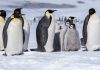
Antarctica’s emperor penguins, huddled together against -40°C blizzards, are icons of life’s tenacity in isolation and mirror the fragility of the postwar liberal order. That order wagered that neutral science could suspend great-power rivalry in humanity’s last unclaimed void. As Russia-China stations multiply from Marie Byrd to Russkaya and vetoes stack up in CCAMLR’s consensus chamber, this frozen laboratory previews how competition remakes global commons not through conquest, but through the subtler art of consensus sabotage. Powers exploit procedural paralysis to stretch treaty ambiguities while Western restraint calcifies into perceived abdication. The continent becomes the canary in the snow globe, its first fractures foretelling bloc fragmentation across other frontiers: Arctic shipping lanes choked by militarised icebreakers, UNCLOS deep-sea mining stalled by veto blocs, and orbital treaties tested by anti-satellite sabre-rattling, where liberal assumptions of shared rules and apolitical expertise crack first in the ice.
Lessons from the Last Continent
Western choices now hinge on this polar endgame. Either reinvest in logistics and science to hold the field, reframe climate diplomacy as prestige, or watch a Russia-China axis fill the vacuum. History whispers a warning. When the hegemon skirts its duties, the liberal order frays. Challengers fill the void America’s influence once stabilised. Emperor penguins, unwitting diplomats of a fraying neutral order, huddle against the storm; when America pulls back unthinkingly, rivals surge in, dooming not just polar wildlife but the liberal system’s global guardrails. The canary in the snow globe has sung, America’s retreat risks a quiet thaw in its hegemony.
If the ice breaks here, it won’t just be the penguins falling through.
The postwar world we’ve taken for granted will silently slip beneath the Antarctic waves.
Written by Tierra Sydnor, Edited by Leontine Kroon
Photo Credit: “Emperor penguins and chicks standing on Antarctic snow with a snowy backdrop” by Jan Tang (uploaded 2025, November 21) on Pexels.