
A new world order is in the making.
With that, the dynamic of the transatlantic alliance is changing, and the costs of European loyalty risk outweighing the benefits of increasingly uncertain American security commitments.
The United States, still at the top of the geopolitical food chain, is starting to pull back from the rules-based order and increasingly employing coercive strategies in a global scramble over hegemony. Europe has a long history of being loyal to American interests in return for military protection. This, however, is becoming increasingly uncertain. Additionally, US trade policy towards Europe is pursuing incoherent economic goals and is being used as an instrument of geopolitical coercion. In this new constellation of strong-armed alliances, European strategic autonomy is turning from a French buzzword into Brussels’ operating logic. However, the economic reality and political expectations linked to US foreign and trade policy are making such a shift challenging.
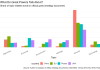
On the economic front, the global monetary regime is being rewritten. Since the 1970s, Asia has been recycling trade surpluses into US dollars, with China at the top since the 1990s. This situation has changed, as Beijing has steadily reduced its holdings of US treasuries since 2013. Due to this declining exposure to US treasuries, the Euro Area has surfaced as the main foreign holder of US government debt in 2022. This shift is largely beneficial to the US, since they can now rely on a political and military ally with a mature economy to fund their deficits, instead of a geopolitical rival. For Europe however, it signals structural financial constraints. Relatively weak domestic market demand has created excess savings, and a need for deep, safe assets is compounded by incomplete capital market integration. As a result, many of these savings are invested in the American risk-free asset, instead of European alternatives.
Tariffs as a Diplomatic Hammer: From Balance Sheets to Battle Plans
This structural background has been further complicated by the Trump administration’s trade policy. To this administration, tariffs are not just a protective economic measure, but also explicitly link trade policy to national security goals. Regarding Europeans, Steven Miran (Trump’s economic guru) argued that tariffs should be used to force them to further increase their long-term exposure to US treasuries, and that they could be considered as a “fee” for US military support. This idea has the clear problem that, compared to China, where such investments are largely centralised, European financial markets are an aggregate of individual decisions and cannot be coerced in such a manner. Since this idea is unrealistic, the more pertinent objectives of US tariffs concern coercing Brussels into concessions on supply-chain issues, big tech regulation, and energy and defence procurement. To define the specific tariff rates, they looked at trade deficits, which only consider physical goods, completely leaving out services and income flows. Once these are included, the US-European economic relationship appears far more balanced than the proposed tariff rates would suggest.
It is fair to say that the US is largely trying to fix an economic problem with Europe that is not there. While tariffs may be framed as a macroeconomic tool to devalue the dollar, in Europe they function primarily as geopolitical leverage. The tariffs also weaken European economic growth and demand, making domestic development even more costly. As long as Europe’s capital markets union remains incomplete and no pan-European safe asset such as a Eurobond exists, the Euro area remains structurally dependent on the US, constraining its macroeconomic leverage and strategic autonomy.
These economic realities are part of the cost of this new transactional transatlantic relationship. But what about the benefits of military protection? US political polarisation and an increased focus on regional hegemony coupled with trending isolationism are challenging the certainty of these commitments. Delays in military and financial support to Ukraine, interruptions in crucial intelligence sharing, shifting NATO rhetoric, and the gradual withdrawal of troops all indicate a reordering of US foreign policy. While European capitals might not be afraid of total US abandonment, they have awakened to the fact that the US could very well put its own strategic goals over European interests towards Russia. This creates a real bind for Europe, where historical and continued dependence now comes with a hefty dose of unpredictability.
Europe’s Strategic Glow-Up: A Work in Progress
The message has clearly arrived in Brussels, which is taking a broad turn towards geoeconomic instruments, weighing in on market protection, independent payment structures, supply-chain screening, export controls, and industrial policy. Another example of this paradigm shift is in Germany, where Berlin has loosened its infamous debt brake, allowing massive defence investments and planning to become the bloc’s strongest conventional army within the next decade. Ever since 1949, European security was tightly linked to the American nuclear umbrella. In a telling statement of how deeply Berlin’s mindset has changed, Merz remarked in a March 2025 broadcast interview: “We need to have discussions with both the British and the French—the two European nuclear powers—about whether nuclear sharing, or at least nuclear security from the UK and France, could also apply to us”.
While these efforts are promising, Europe is stuck in a transitional phase, where economic realities and a fragmented political landscape are keeping it from negotiating with the US on a more equal basis. Until now, Brussels believes that the macroeconomic costs are still worth the benefit of avoiding US abandonment in Ukraine. In the meantime, efforts are being strengthened to develop autonomous defence capabilities, with common programmes such as the Structure for European Armament Programme (SEAP) and Readiness 2030 exemplifying this shift. Yet, the European defence market remains fragmented as long as it is excluded from multiple EU internal market rules due to security and sovereignty policy questions, and US structural financial reliance persists in the absence of a pan-European safe asset and a fully integrated capital market.
If the EU really wants to shape the world in line with its values and defend the national territory of its member states without simply being a shock absorber, there needs to be an even greater effort to complete its unfinished economic and political integration. Only then can it finally match its economic might with political power capable of safeguarding its interests.
Written by Konrad Barth, Edited by Konstantin Philipp
Photo Credit: Christian Lue (uploaded December 24, 2020) on Unsplash.